 Magazine 1: NME
 (New Musical Express)
Type: Specialist
Target audience -
Age: 16+
Gender: Unisex
Ethnicity: White
Lifestyle: Fan of music
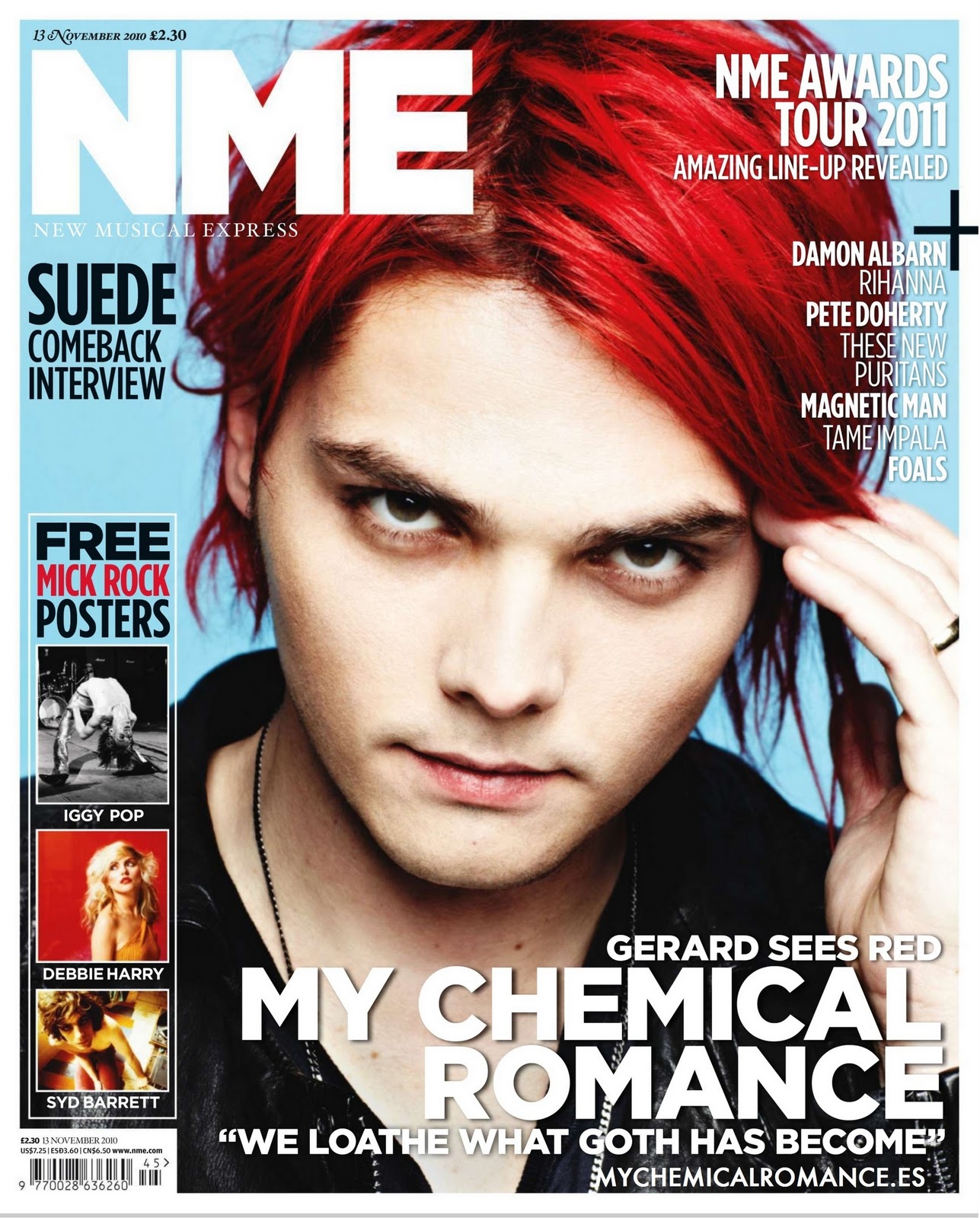
NME is a music magazine which mainly specializes in rock, indie and metal music. This is evident through the mentioning of bands of these particular genres on the front cover - My Chemical Romance being a very famous band which has been mentioned and set as the main focus of this issue of NME. The audience's age would range from 16+ as the magazine has a youthful feel, as the bands being talked about are relatively new. Saying this, there are also posters free of older artists - such as Iggy Pop, Debbie Harry and Syd Barrett, which suggests that the audience could also be of an older age and/or that the readers like new and old music. I decided the that the audience of this magazine would probably be unisex as there are both male and female celebrities/artists being mentioned of the front cover - like Rihanna, Debbie Harry and Suede and then the males; Gerard Way, Syd Barrett and Iggy Pop. This strikes a good balance between the genders so both can enjoy the magazine without feeling the focus is on a particular sex. The ethnicity of the readers of this magazine would my opinion, be mainly white. Stereotypically, white people listen to indie/rock and metal music while black people listen to Hip-hop and Rnb. Although this isn't true in all cases, the majority of the readers are white because the artists are also white. The same goes when we look at Hip-hop music, where a huge percentage of the artists are black. Other cover lines of this magazine are in Black
On the cover of this issue of NME, unlike other magazines, there aren't multiple stories but rather a main story which is about My Chemical Romance, which is evidently the main focus of the magazine as in front of the cover image is the band member's lead singer (Gerard Way) and the band's name in bold letters. The use of only the first name of the artist is a indication that NME assume that the reader is familiar with him and the band, which is a form of fan terminology this magazine uses heavily. Showing the band's name is also important to introduce them to any readers who have not heard of them before. The headline story says "Gerard sees red" which could be a visual pun because his hair is red. Underneath it then uses a direct quote from the band which relates to what the story inside is about - giving the reader an idea of what they are in the magazine for. Surrounding the main story are tiny snippets of what we are going to find in the magazine. Rather than the magazine giving exclusive information on the front, we are presented with only the name of the celebrity who the story is about. For instance, 'Suede: Comeback interview' gives us no information into what this interview is about, but that it's an exclusive insight into an artist who has been away for awhile, which the audience will be intrigued by. All of the language used on the front cover is grammatically correct, which suggests that although the audience are of a younger age, they would take what the magazine is saying seriously because its a subject that they are highly interested in. Image wise, there are only 4 images on this front cover, one in which is the main cover image, where the other 3 are previews of the posters which come inside of the magazine. Using a limited amount of images is important for the magazine to stop any over crowding. If there was an image for each article, the cover would look messy and give too much away to the reader and they would have nothing to look forward to, creating mystery for the reader. The cover of this magazine is quite plain compared to most magazines: but there is a lot of colour. The background colour - which is a pale blue, contrasts with the cover imagine of Gerard way, who has bright red hair. This makes the image stand out against the background and takes the attention away from any of the surrounding stories, making this the main attraction for the potential reader if it was seen by them in the shop. The master head 'NME' , which is also an acronym for New Musical Express, is layered on top of the image of Gerard Way in a thick white text. As the master head is short, the editors feel that they do not need to hide the rest of the word behind the imagine, which is usually done by magazine companies as the title takes up a lot of room and takes the focus away from the main image. The main cover story line for My Chemical Romance is in a large, bold and white text with a black shadow, to stand out against the black shirt which the celebrity is wearing and show that this story is a dominant part of the magazine. The layout is spacey and there are clear sections to indicate that this is a separate story from the over. It's not overcrowded which may be to fool the readers that there isn't much inside and they will be pleasantly surprised about how much NME gives.

Type: General
Target audience -
Age: 18+
Gender: Female
Ethnicity: Mixed ethnicities
Lifestyle: Students and working class
FASHION is a general magazine which features multiple different interests - from fashion tips (on how to save money and/or get the best out of your money) to celebrity interviews and learning to love yourself. I have said the target audience for this particular magazine would be 18+ as the front cover mentions "Why would you want sex" which I didn't think would be suitable for a younger audience. I also feel this magazine is aimed at students or working class women as it talks about "How to save & when to splurge", "Never pay full price again" and "Reduce your shopping guilt". This suggests the readers haven't got a lot of money to spend on clothing items but want to look their best so they are trying to pull in readers with tips on how. The audience would predominately be women. This is evident as anyone who is mentioned on the front are female, such as Miley Cyrus (who is the main focus) and Isabel Marant, who is from the leading clothing store H&M. The ethnicity of this audience would be mixed as I don't think women of a particular colour would find this more attractive than another. The fact the magazine is about mainly about person choices such as clothing and sex makes the magazine more diverse as the readers can pick what they like from the magazine without feeling the items and advice being given has been aimed at women of a specific race.
As FASHION magazine is a general magazine - meaning it does not focus or specialize on a specific interest. When it comes to the stories on the front cover, this is evident as other than the headline story - "The Math Issue - How To Save & When To splurge" talks about 4 different topics. All the language used on this magazine cover is grammatically correct, however, in the article snippet "How to save and when to splurge", the 'and' is abbreviated to the '&' symbol. This is done so the text does not take too much room up on the magazine cover, as editors try to use the least amount of words to explain what they need to say. It could be also be a way of appealing to a younger audience as '&' is used commonly within the younger generation as a quicker way of texting someone. Each article does not give a huge amount of detail away because there are so many things that they have wanted to mention in this issue, that if they went into full detail, the whole magazine would be given away and leave nothing to be anticipated by the reader. There is only one image on this issue of FASHION, which is of Miley Cyrus. This image has been centered to show the readers that she is the main focus of this particular issue and to show this celebrity has power, especially to a reader who idolizes the celebrity in question. Using Miley Cyrus is also a technique magazines use called celebrity endorsement, which is used to increase the appeal of magazines as they commonly use celebrities who are in the news or are popular at that particular time. The design of the magazine itself is quite simple, as it only use 3 basic colours. The master head which is "FASHION" coloured in a a thin, blue text is hidden behind Miley Cyrus slightly, which has been done because the magazine feels their audience already know who the magazine are and have confidence that they will sell despite the title being hidden and to show the celebrity in front of the master head is more dominant/important than the title is. It is also the only text on the magazine in blue and in the largest font, which shows that this is the most important text on the magazine. Other colours used such as red and black have been used to tie in with what Miley Cyrus is wearing, as her clothing is black and her lipstick is red. It is also a way of contrasting against the white background so you can clearly see what the text says. On 2 of the cover lines ("The Math Issue and "Why You Should Want Sex") specific words have been printed in a different colour, amount of boldness and size, such as 'Math' and 'Sex'. This emphasis on the words directs the reader's eyes straight to the particular word, so the cover line is straight to the point about what this part of the magazine will be about. Spacing wise, the magazine has gone with a simple layout which helps the main cover image stand out against the blank white background.

No comments:
Post a Comment